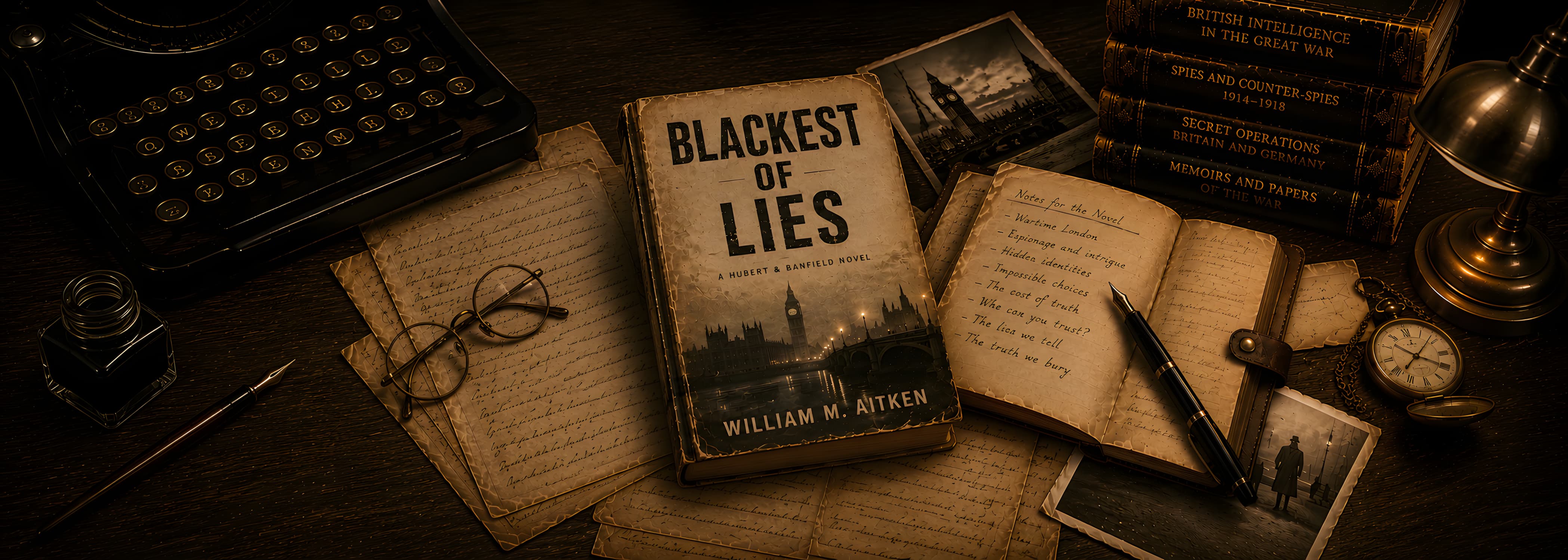
Why Blackest of Lies?
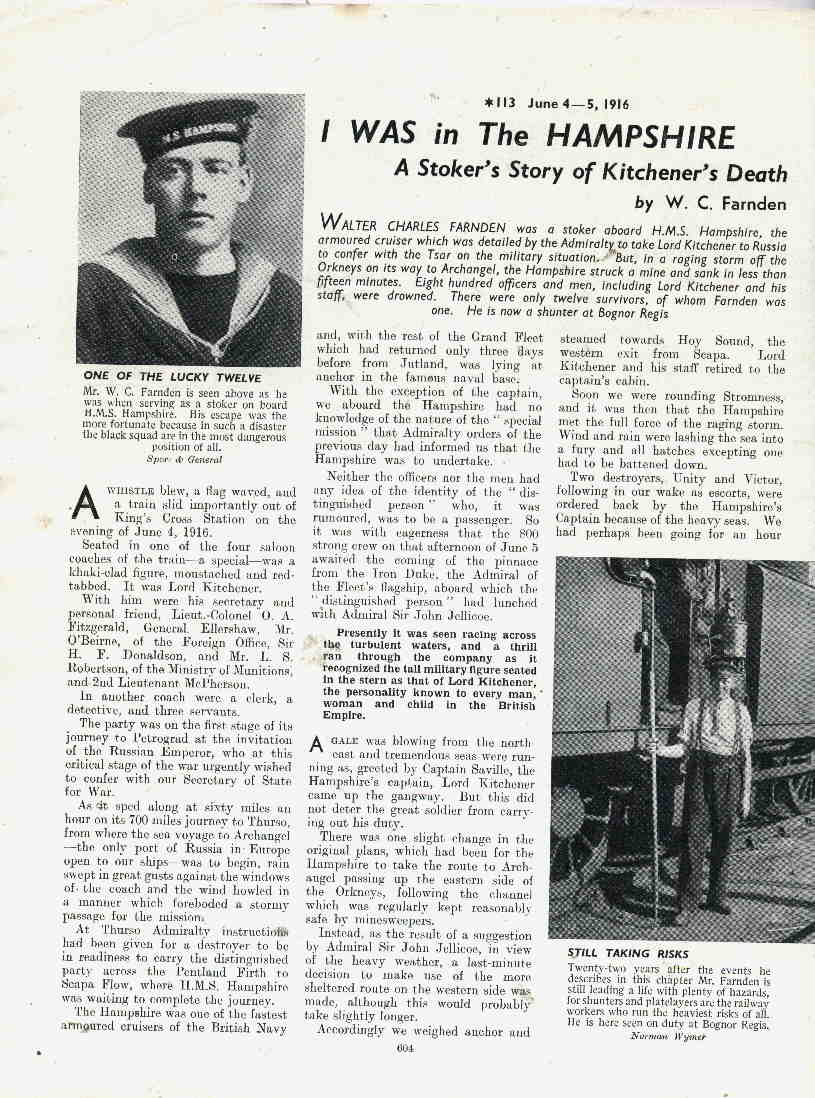
The idea for Blackest of Lies began many years ago, when I was living in Norway and came across Donald McCormick's account of the death of Lord Kitchener. I found the book fascinating, although I was never entirely convinced by all of McCormick's conclusions. Much of his work depended upon interviews with people who had themselves been close to the events and, by the time I encountered the story, both McCormick and those he had interviewed were long dead. That made his claims difficult to test properly, but it also gave the whole account a strange, old-fashioned "Ripping Yarn" quality: intelligence officers, secret meetings, unexplained incidents, a great national figure and a warship lost at sea.
McCormick himself remarked that the coincidences and unanswered questions surrounding Kitchener's death would make an excellent plot for a novel. I remember thinking that, whatever one made of his historical case, he was absolutely right about that.
The detail that first made me stop and think concerned the minefield laid by the German submarine commander Kurt Beitzen. The mines, as I understood the evidence, appeared to have been laid unusually deep. That was not proof of anything, of course, but it was exactly the sort of small detail that lodges in the mind and refuses to go away. Once I had noticed it, I found myself asking why.
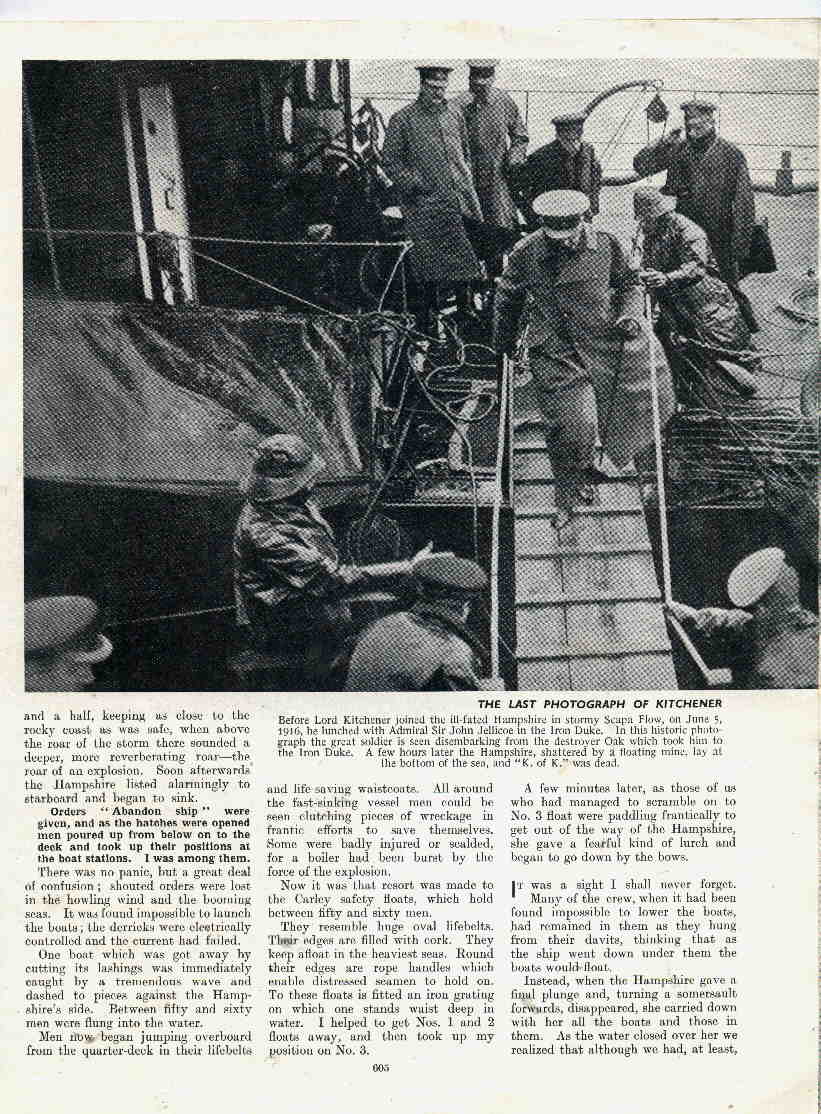
Then there was the much larger question of the voyage itself. Kitchener was not simply another senior officer. He had become one of the great symbols of Britain's war effort, a man whose face was known throughout the country, yet at the height of the greatest conflict the world had then known he was permitted to undertake an extraordinarily hazardous sea journey to Russia. I kept wondering whether we would regard it as unremarkable if Churchill had been allowed to undertake a similarly dangerous journey during the Second World War.
There was another embarrassment for me as a supposed student of history: until I began looking into all this, I had not even realised that Kitchener had died during the war. I had somehow imagined that, like so many famous Victorian and Edwardian military figures, he had survived into the inter-war years and eventually faded into retirement, perhaps spending his time with his roses and his porcelain collection. Instead, he vanished abruptly from the historical stage in June 1916.
Questions, Coincidences and Closed Doors
The more I looked, the more the story accumulated details which interested me without ever amounting to proof of anything. Lloyd George, then Minister of Munitions, had apparently been expected to travel with Kitchener almost until the last moment, but did not go. The reason given was connected with the aftermath of the Easter Rising in Ireland, and I confess that I found myself wondering what precisely that had to do with the Minister of Munitions. After Kitchener's death, Lloyd George became Secretary of State for War. Again, none of that proves anything sinister, and I have no desire to present myself as some sort of conspiracy enthusiast, but novelists are allowed to be interested in coincidence.
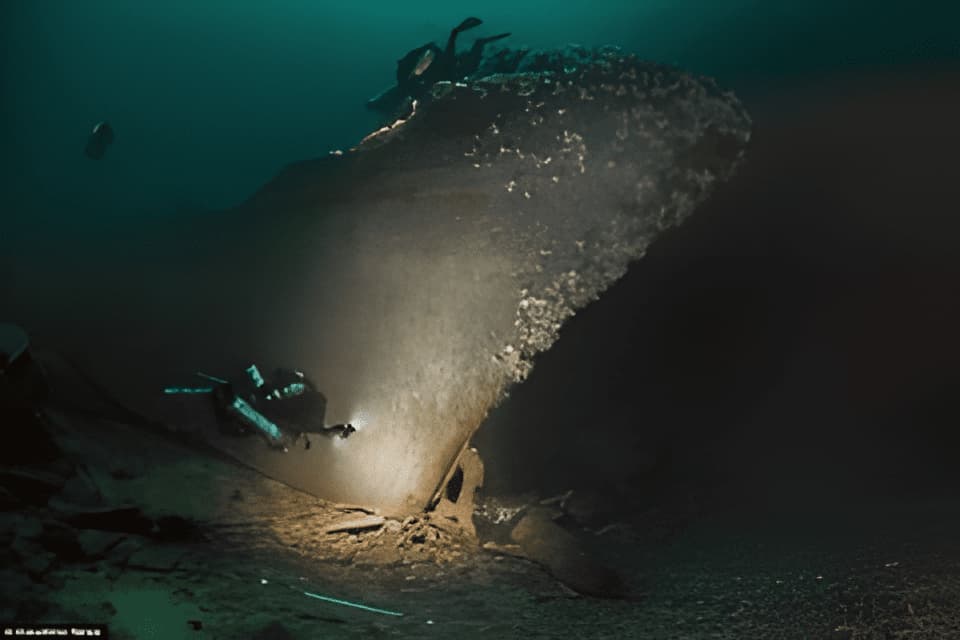
There were other curiosities. For many years diving on the wreck of HMS Hampshire was prohibited on the grounds that it was a war grave. That was perfectly understandable in itself, except that diving had been permitted on other wrecks which were also war graves. During my own research I also encountered the peculiar frustration of discovering that a surprising amount of material was still unavailable. That may have changed since, but at the time there were doors which simply remained closed.
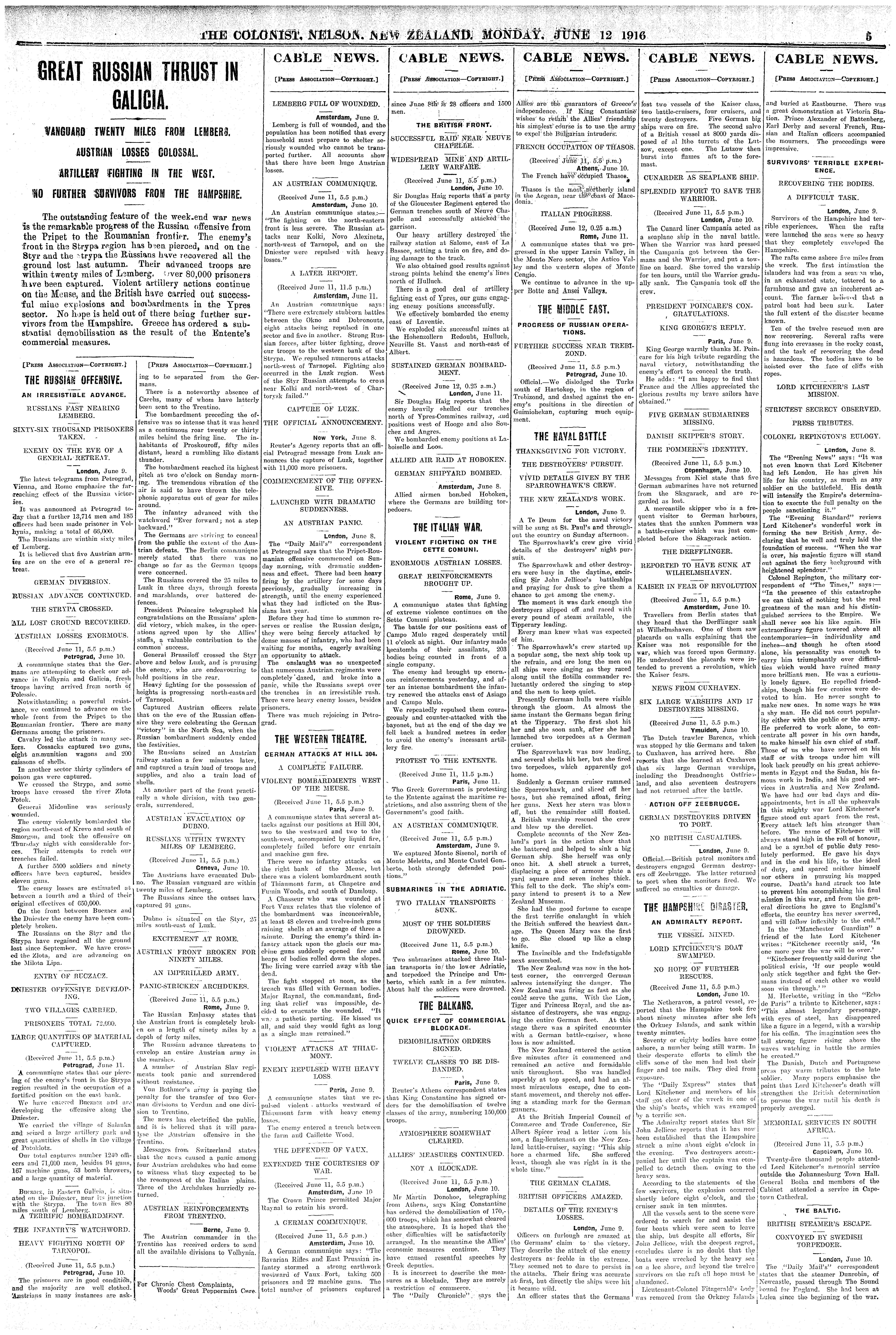
McCormick also described three men being separated from the principal group of survivors. I might have dismissed that as one more colourful detail had I not later encountered the parliamentary exchange concerning whether there had been fifteen survivors or twelve. Taken individually, none of these things persuaded me that I had stumbled upon some enormous historical secret, but together they created precisely the kind of uncertainty in which a novelist can begin to work.
Fiction in the Gaps
I do not write alternate history. I am much more interested in beginning with the historical record and leaving the major events where they belong. The pleasure lies in asking what might have happened between those fixed points, in the places where the evidence becomes thin or where the record simply stops.
That approach makes the history a constraint rather than a decoration. Every new fact has to fit. Sometimes research destroys a promising idea; sometimes it forces a change of direction; and occasionally it hands the novelist something far better than anything he could have invented. Blackest of Lies grew out of a collection of historical questions which seemed to sit beside one another very comfortably. My task was to find a piece of fiction which could inhabit that framework without requiring me to distort it.
Eventually I found one. To say exactly what it was here would rather spoil the novel.
One ingredient which proved particularly useful was the idea of a double. I had always regarded that as a rather tired fictional device until I began looking at the historical use of doubles and realised that reality had got there long before novelists did. Montgomery provides perhaps the best-known twentieth-century example. Once I discovered that, another piece of the puzzle fell into place, although what I eventually did with it belongs in the story rather than on this page.
Finding Hubert and Banfield
Banfield actually came first. McCormick described a female Special Branch agent who had been working in Turkish baths and overheard what she believed to be a plot against Kitchener's life. I could discover very little about her. McCormick referred to her as "Madame Hubert" and said that, many years later, she was living in Portugal. That fragment was enough to start the imagination working.
Special Branch and MI5 necessarily worked closely together, so I began to wonder about an MI5 officer who might work alongside this mysterious woman. Hubert's vaguely French-sounding name suggested Canada, but a Canadian officer of military age ought to have been at the Front, which meant I needed a reason why he was not. A straightforward bullet wound would have done the job, but the more I looked at the period, the more Second Ypres and the first large-scale use of poison gas seemed the better answer. From there, one research question led naturally to another until the characters began to acquire lives of their own.
That is often how fictional people arrive. I rarely find that they spring fully formed from the imagination. More often, one historical fact creates a practical problem, solving that problem creates another, and somewhere along the way a character walks through the door.
The Pleasure of Writing It
Not everything about historical research is dusty files, closed archives and difficult questions. Some of the greatest pleasure in writing Blackest of Lies came from the characters themselves, particularly the military banter between Hubert and Farmer and the casual irreverence shown towards rank. Fitzgerald, meanwhile, is frequently appalled by the liberties they take with the dignity of the great man whose memory they are supposed to be respecting.
Thomson gave me another opportunity for mischief. I had found a photograph of him possessing what could only be described as a magnificent nose, and it seemed almost inevitable that at some point I should give the poor man a dreadful head cold. One of the earliest reviews of the novel came from a doctor who had served in the military and wrote, "At last — someone who understands how the military speak to one another." I treasured that, because the exchanges between the characters had been some of the most enjoyable parts of the book to write.
When the Characters Take Over
The ending caused me more difficulty than much of the historical framework. In my first version, one of the central characters made a decision which was perfectly logical in terms of the plot. I wrote the scene, read it back and realised that it was wrong. By then I knew the character too well. The decision might have made sense, but it was not something that particular man would have done.
So I rewrote the ending. It was one of those moments when the old claim that characters begin to dictate their own behaviour suddenly ceased to sound like a literary cliché. After several hundred pages, you know them well enough to recognise when you are forcing them to act merely because it is convenient for the author.
Murdering the Darlings
The other painful lesson was that research does not earn a scene the right to remain in a novel. I spent a considerable amount of time at Kew following lines of inquiry and building scenes around material which I found genuinely fascinating, only to remove them later because they slowed the thriller. "Murder your darlings" is an elegant phrase for a remarkably disagreeable activity.
I particularly wanted to retain more of the later House of Commons material because it showed how firmly Kitchener remained in the British imagination years after his death. The deeper I went into the research, the more I realised just how extraordinary his public standing had been. One account describes a young soldier found dead in the trenches clutching his empty rifle and a crumpled photograph of Kitchener. Another story I encountered told of an elderly civilian who, on hearing of Kitchener's death, took his own life because he believed there was now nobody capable of stopping the Germans marching up Whitehall.
Whether every surviving anecdote can still be proved beyond doubt is almost beside the point here. What they reveal is the extraordinary place Kitchener occupied in the popular imagination. He was not merely a senior soldier; he had become a national symbol.
"I Have Plans for You Two"
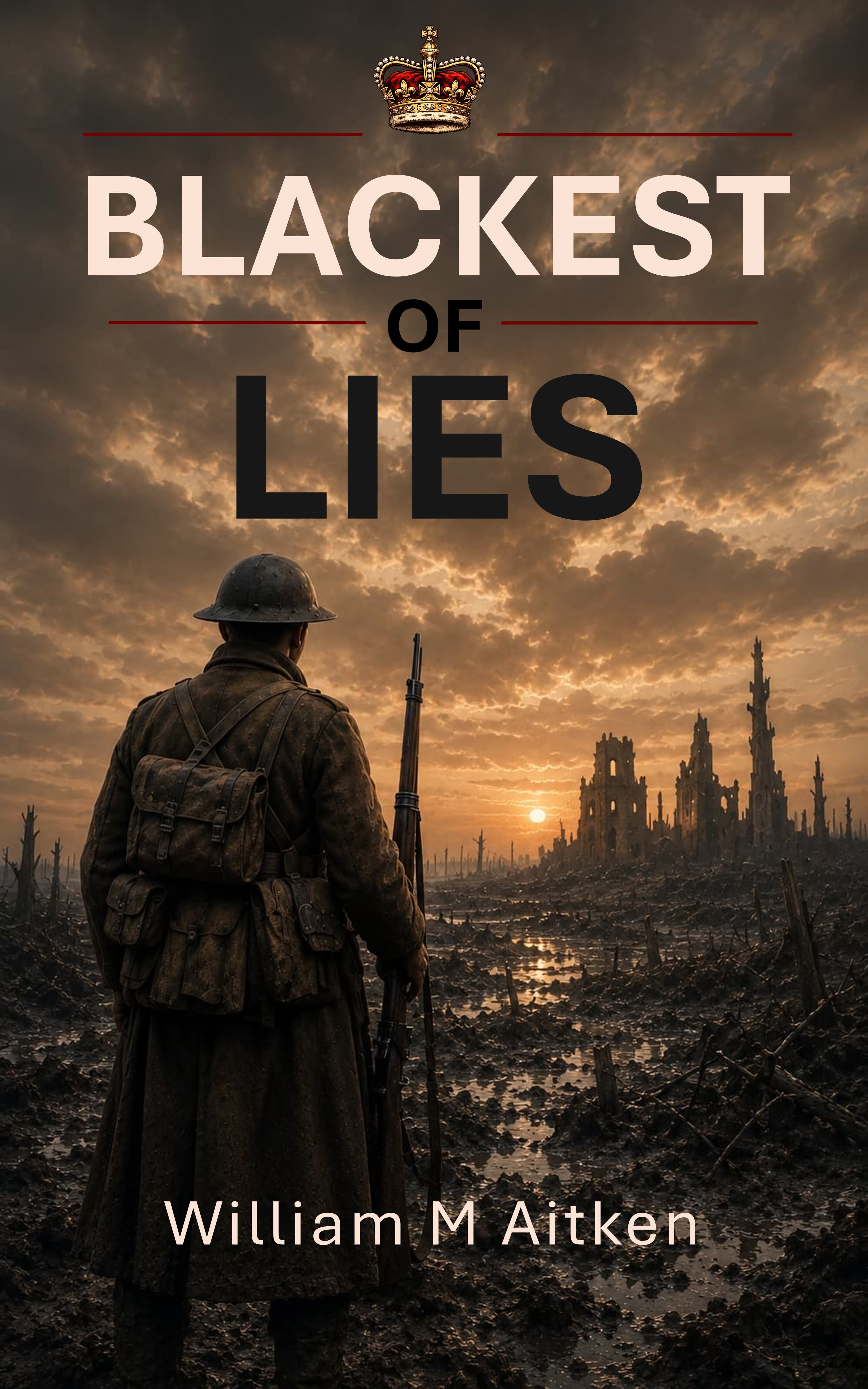
I did not begin Blackest of Lies with a grand design for a series. In fact, I knew there would be another Hubert and Banfield novel at the precise moment I wrote Kell's line, "I have plans for you two." By then the pair had ceased to be simply the people required to carry this particular story. I wanted to know what Kell's plans actually were.
Honestly, that was the moment the series began.
The answer eventually became Sweet Sorrow.
Where History Ends
One reviewer later told me that he could not tell where the history ended and the fiction began, and I felt I had achieved something when I read that. It describes rather well what I had been trying to do. I do not want the invented material to announce itself; I want it to sit quietly amongst the documented events and behave as though it had always been there.
My hope is that a reader finishes Blackest of Lies entertained first and curious second. Several readers told me that they found themselves searching online while reading, trying to discover which parts were history and which were mine. If, after turning the final page, somebody goes looking for Kitchener, Room 40, Gustav Steinhauer, HMS Hampshire or some of the strange circumstances surrounding that final voyage, then the novel has done something beyond simply telling a story.
I have always found myself drawn less to the centre stage of history than to the places where the light begins to fade. The great figures have countless biographers; what fascinates me are the unanswered questions they leave behind. The world of intelligence is particularly rich in such places because secrecy, ambiguity, concealment and misinformation are part of its nature. Sometimes the historical record is incomplete not because historians have failed, but because somebody at the time intended it to be incomplete.
Those are the places that interest me most: the places where history falls silent and where fiction, if handled with respect, may begin.